

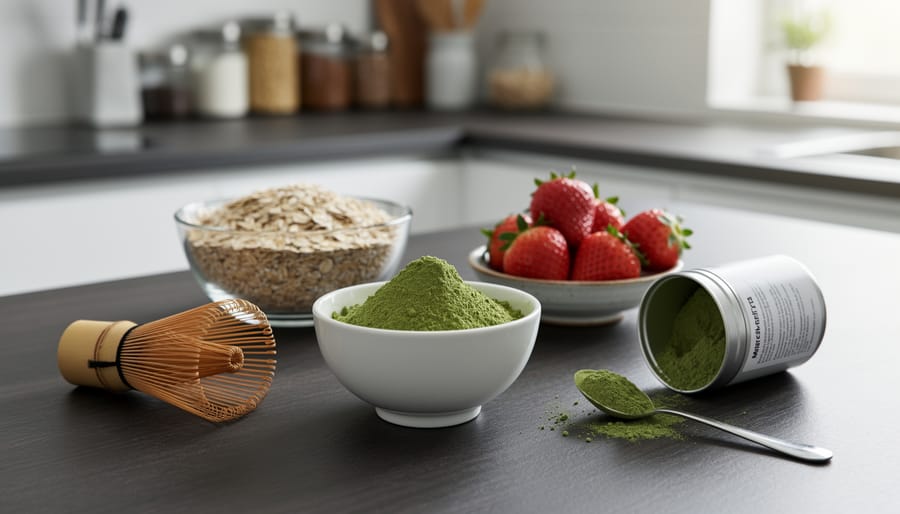
7 Ways to Use Matcha Powder Beyond a Matcha Latte
For many people, matcha starts with a latte. But matcha powder can be used for much more than drinks. Its distinctive flavour works well in breakfast recipes, baked goods, desserts and simple snacks.
Depending on the matcha you use, you may notice grassy, creamy, nutty, sweet or umami notes. Those flavours can completely change a familiar recipe and make matcha a surprisingly versatile ingredient in the kitchen.
If you have a tin sitting in your cupboard and want to do something other than make another latte, here are seven ways to use it.
1. Add Matcha to Overnight Oats
Overnight oats are one of the easiest places to experiment with matcha because you don’t need to change much about your usual recipe.
Start with oats, milk and your preferred yogurt or sweetener. Then whisk a small amount of matcha into the milk before combining everything.
This helps distribute the powder more evenly and prevents large clumps from forming.
Matcha works particularly well with toppings such as:
- Strawberries
- Raspberries
- Banana
- Coconut
- Chia seeds
- Honey
- Maple syrup
Start with a relatively small amount of matcha. You can always increase it the next time if you want a stronger flavour.
2. Make Matcha Pancakes or Waffles
A little matcha can turn an ordinary pancake or waffle recipe into something completely different.
Simply sift the matcha into your dry ingredients before adding the wet ingredients. Sifting is important because finely ground tea powder can clump easily.
The result is a naturally green batter with an earthy flavour that pairs especially well with fruit and lightly sweet toppings.
Try serving matcha pancakes with sliced strawberries, bananas, whipped cream or maple syrup.
You can also make a simple matcha drizzle by mixing powdered sugar with a small amount of milk and matcha.
The key is balance. Adding more matcha doesn’t always make a recipe better. Too much can overpower the other ingredients and introduce unnecessary bitterness.
3. Bake Matcha Cookies
Cookies are one of the easiest baked goods to make with matcha.
Matcha can usually be incorporated directly into the dry ingredients alongside flour, baking soda or baking powder.
It pairs particularly well with:
- White chocolate
- Macadamia nuts
- Sesame
- Coconut
- Vanilla
- Strawberry
White chocolate and matcha have become a particularly popular combination because the sweetness of the chocolate balances some of matcha’s vegetal and bitter notes.
When baking with matcha, remember that heat can affect both its colour and flavour. Your finished cookies may not have the same vivid green colour as the powder before baking.
4. Mix Matcha Into Yogurt
You don’t actually have to cook with matcha to use it in food.
One of the quickest options is simply mixing it into yogurt.
Add a small amount of sifted matcha to plain or vanilla yogurt and stir thoroughly. You can then build a bowl with granola, fruit, nuts and seeds.
Greek yogurt works especially well because its thick texture creates an almost dessert-like consistency.
If you find the combination too tart or earthy, add a small amount of honey or maple syrup.
This is also an easy way to experiment with different matchas. Because there are relatively few ingredients, differences in aroma and flavour are easier to notice.
When choosing matcha powder, consider how you plan to use it. Matcha that tastes delicate when whisked with water may behave differently when combined with milk, yogurt, sugar or other stronger ingredients.
5. Make a Matcha Loaf Cake
If you enjoy banana bread, lemon loaf or pound cake, matcha loaf cake is worth trying.
Matcha can be incorporated into a basic loaf batter to add both flavour and colour.
Vanilla is an easy pairing, but citrus can be particularly interesting. Lemon and yuzu-style flavours provide acidity that contrasts with matcha’s deeper vegetal character.
You could also marble a matcha batter with a plain vanilla batter rather than making the entire loaf green.
Just like with cookies, sift the matcha with your dry ingredients before mixing your batter. This makes it much easier to get consistent colour and flavour throughout the cake.
A simple glaze on top can also help balance stronger matcha flavours.
6. Pair Matcha With Raspberries
Matcha and fruit can work surprisingly well together.
Raspberries are particularly useful because their bright acidity and sweetness provide a sharp contrast to matcha’s earthy and umami notes.
There are plenty of ways to bring the two together.
You could make a matcha yogurt bowl topped with raspberries, add raspberry compote to matcha pancakes or create a layered matcha and raspberry dessert.
Another option is raspberry syrup.
A Foodie’s Life has a useful collection ofraspberry recipes worth trying, including a simple raspberry syrup that can be used on pancakes, waffles, oatmeal and desserts.
That same syrup could be drizzled over matcha pancakes, added to a matcha dessert or used to create a raspberry matcha drink.
Strawberries, blueberries, peaches and citrus can also work well with matcha, so don’t be afraid to experiment with seasonal fruit.
7. Make Matcha Ice Cream or Frozen Yogurt
Matcha and creamy desserts are a natural combination.
Milk and cream soften some of matcha’s stronger vegetal notes while allowing its flavour to remain noticeable.
If you have an ice cream maker, matcha can be incorporated into a traditional ice cream base.
But you don’t necessarily need one.
For a simpler option, mix matcha into Greek yogurt with a little honey or maple syrup, then freeze the mixture in a container or popsicle mould.
You can also make matcha banana “nice cream” by blending frozen bananas with a small amount of matcha.
Again, start conservatively. Frozen foods can taste different from foods served at room temperature, so you can adjust the amount of matcha after experimenting with your first batch.
Tips for Cooking and Baking With Matcha
Using matcha in food isn’t difficult, but a few techniques can make a noticeable difference.
Sift your matcha
Matcha is extremely fine and naturally forms small clumps.
Sifting it before adding it to batter, yogurt or liquids makes it much easier to distribute evenly.
Don’t automatically use more
Matcha has a concentrated flavour.
Adding twice as much won’t necessarily produce a better dessert. It can make the finished recipe noticeably more bitter.
Start with a smaller amount and adjust from there.
Think about the other ingredients
Matcha rarely exists alone in a recipe.
Milk, sugar, chocolate, fruit and flour can all change how prominent its flavour becomes.
A matcha that tastes strong when whisked with water might taste significantly milder once added to a cake or bowl of yogurt.
Pay attention to sweetness
A small amount of sweetness can complement matcha, but the goal doesn’t have to be hiding its flavour completely.
Instead, use sweetness to balance the grassy, vegetal or bitter characteristics of the tea.
Matcha Isn’t Just for Drinking
A matcha latte may be the most familiar way to use matcha, but it’s only one option.
Once you start treating matcha as an ingredient rather than only a drink, there is plenty of room to experiment.
Add it to breakfast. Bake it into cookies. Pair it with berries. Turn it into frozen yogurt. Even small changes to recipes you already make can introduce an entirely different flavour.
And because matcha can vary considerably in taste, experimenting with different powders and flavour combinations is part of the fun.